Subscribe via:



Show Summary
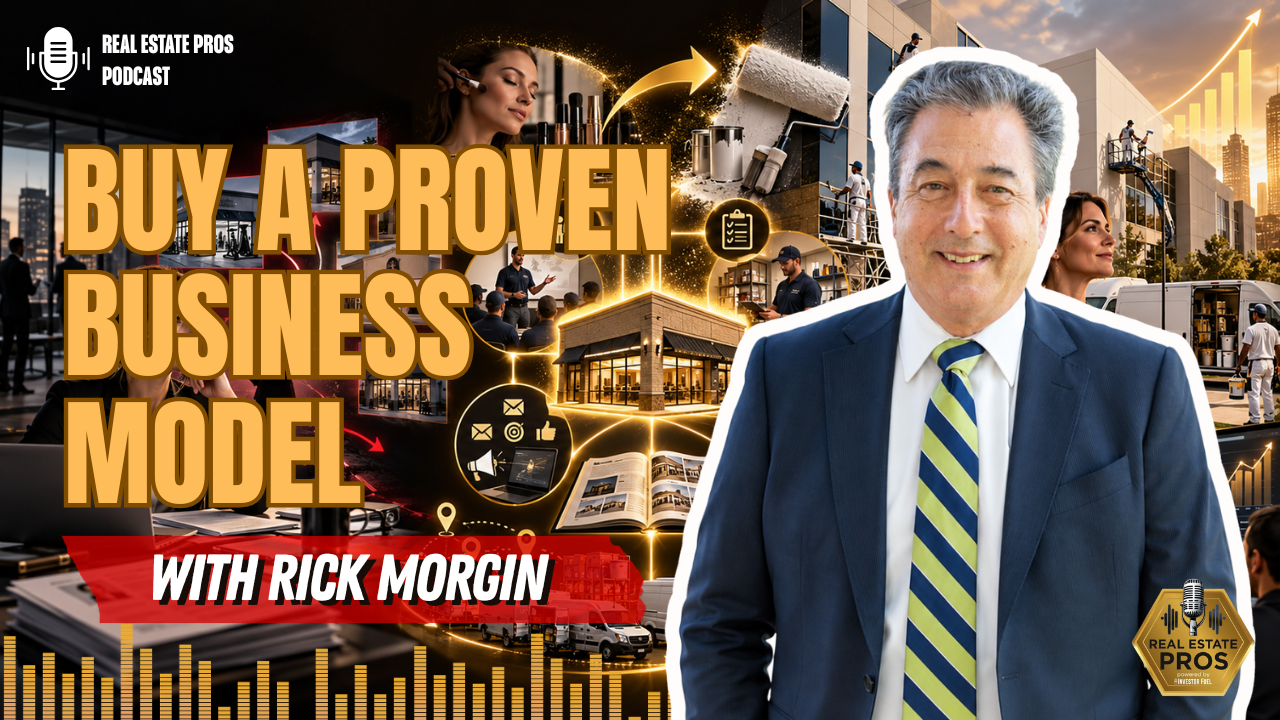
In this episode, we explore the ins and outs of franchising with Rick Morgin, a seasoned franchise consultant with over 30 years of experience. Rick shares insights on how to evaluate franchise opportunities, the risks involved, and how franchising can be a strategic move for entrepreneurs looking to expand or exit their current careers.

Chapters
00:33 Introduction
01:11 Who Is Looking at Franchises Today?
02:38 How to Choose the Right Franchise
04:05 Owner-Operator vs. Semi-Absentee
05:16 Can You Really Work 10–20 Hours?
06:36 From Beauty to a 7-Figure Franchise
09:04 A Franchise Red Flag That Killed a Deal
10:20 The Biggest Mistake Franchisees Make
12:12 How Much Cash Do You Need?
13:58 Understanding Franchise Working Capital
15:23 Virtual Franchise Opportunities
16:31 Franchising and Owning the Real Estate
18:29 Risk, Scale & Multi-Unit Growth
23:01 New Franchise Opportunities
Resources and Links from this show:
Listen to the Audio Version of this Episode
Investor Fuel Show Transcript:
Rick Morgin (00:00)
She goes to their discovery days, both of them.
What made her decision was she flew out to Utah to the painting company called Painter Bros and experienced the culture.
Kind of crashed a training program of new franchisees. And completed her third year in business. Should top seven figures in revenue. Wow. In fact, I just spoke with a franchise developer last week, and she gave me her number last year’s numbers and this year’s numbers. So she’s growth. Now her tagline or her statement about her is.
I was I’m so used to painting faces and now I’m painting buildings.
Dylan Silver (01:06)
Hey folks, welcome back to the show. Today we’re joined by Rick Morgin, a California-based franchise consultant who brings more than three decades of experience across franchising, finance, and business development, and helps entrepreneurs evaluate franchise ownership.
Opportunities Rick, thanks for joining us here today.
Rick Morgin (01:27)
you’re welcome. It’s a privilege to be on your show, Dylan. I appreciate it.
Dylan Silver (01:31)
what types of deals and conversations are coming across your desk, so to speak, these days?
Rick Morgin (01:37)
I’ve had conversations with tech executives who have run their they’re at the end of their rope as far as their corporate career.
And I have talked to a lot of independent business owners who are looking to expand. I suggest it through what’s your exit strategy. And then when they if they say they don’t have one, then I say, Well, you can create value by expanding through developing a franchise system. And we talk about that.
Dylan Silver (02:02)
I’ve had franchise franchisees and a couple of people who started franchises and one that comes to mind actually is college hunks hauling junk. it’s a moving company. And it’s funny because it’s this like red car theory. As soon as you hear it once, then you see it everywhere. I started to see all these
Vans with their logos. And I think there’s so many franchise opportunities that it can be a little bit of overwhelm, maybe analysis, paralysis. I know as an outsider looking in, I wouldn’t even know where to start. where do folks typically start when they’re thinking of, well, what do I choose to be my franchise?
Rick Morgin (02:39)
In a typical conversation, maybe just like we’re having, I’ll ask them what got you here. What are we trying to do? And that’ll lead into well, their explanation of their motivation for looking at a franchise. And then I like to describe as briefly as I can how we’re going to work together, what this journey is going to be, and how we narrow down the
wide offerings into one or two that we want to dig deeper and we do that together. So yeah, yes, I the franchising is very diverse, and but there is a process to figure out which is the best one to help them reach their goals.
Dylan Silver (03:16)
I wanna ask you specifically about this idea of retiring, so to speak, and becoming a franchise owner. When I think a lot of people think of franchises, you hear about folks who own lots of franchises and maybe that’s more hands-off, but I think a lot of people and myself included think, well, if I’m starting a franchise and this is my first one, that this is maybe gonna be a big lift on my own behalf, that this is something that’s time intensive.
is there some variance there or are most franchises for the owner of it fairly hands off?
Rick Morgin (03:48)
Franchising can offer that manage the manager model in addition to owner operator and executive, that and true investor who’s gonna be owning and operating multi units. So they’re really can’t be hands on.
When someone who wants to spend 10 to 15, maybe 20 hours a week, we really dig into that to make sure that it’s true. Because I would hate for them to get into the situation where it’s really 30 or more and their jobs being affected. Because they they want to keep the job and operate the business. That our lexicon is semi absentee. That’s
model has really come into play, I would say, in the last seven, eight years as a true option.
Dylan Silver (04:27)
when you mentioned semi absentee, is there a weekly time budget, for lack of a better word, that that people should allot, a certain number of hours to their franchise?
Rick Morgin (04:36)
yes. it may state that 10 to 20 hours a week and it may vary. But when you go in when you’re deeper in the process and you start talking to franchise owners, now you can ask them, is it really ten to twenty hours a week? Yeah.
I guess a misconception is that all franchises are alike and all owners are alike. So you gotta think of it on a continuum. There are more skilled owners than others.
Dylan Silver (04:58)
I would really like to dive into maybe a nugget for our audience, what a sample a case study might look like someone a tech executive coming from the tech world and looking at franchising and how that started. Can you walk us through what you know one looked like in the past?
Rick Morgin (05:15)
sure. now this is gonna be an owner operator example, not from tech, but from the world of beauty.
Dylan Silver (05:23)
Okay.
Rick Morgin (05:23)
New York City. and her husband were in New York City working for the major beauty companies, the Oreole and others. They relocate to Florida. We connect on LinkedIn, she’s ready. She really can’t continue her New York City job in eastern Florida
So we start to look into the franchises and we start to filter it out. She’s down to two. She’s looking at commercial cleaning and a painting company that has a unique process and culture.
She goes to their discovery days, both of them.
What made her decision was she flew out to Utah to the painting company called Painter Bros and experienced the culture.
Kind of crashed a training program of new franchisees. And completed her third year in business. Should top seven figures in revenue. Wow. In fact, I just spoke with a franchise developer last week, and she gave me her number last year’s numbers and this year’s numbers. So she’s growth. Now her tagline or her statement about her is.
I was I’m so used to painting faces and now I’m painting buildings.
Dylan Silver (06:23)
That’s right.
Rick Morgin (06:23)
Painting
Walmarts, you know, and from and residences too.
Dylan Silver (06:27)
Amazing, I mean, when we think about how many opportunities there are, I mean, I’m thinking a lot of these conversations are what’s right for me. I don’t come from a background being a franchise owner. You mentioned this woman from the beauty space and a tech executive, and then going to a franchise model where you’re owning a painting a business is entirely different, right? When
You’re having these conversations with clients, are they typically at the you know discovery stage or are they at the point where they’re kind of very close to closing on a deal and wanting a second opinion before they go ahead and make that final jump?
Rick Morgin (07:03)
it’s they’re ready for to get into discovery and help figure out what’s right. I have had a couple of referrals they ended up being clients who were deep into the process. they in fact they’re ready, almost ready to sign the franchise agreement. Then they spoke with a friend who referred them to me. And I just gave them some information on based on what I heard of check into these things.
And what moved them away from it was that franchise company hadn’t trademarked their brand.
Dylan Silver (07:29)
Mm.
Rick Morgin (07:30)
Now that’s that could be dangerous,
Dylan Silver (07:32)
I’m imagining that there are a lot of people who are understandably new to this, and you’ve seen so many people who may not be from the franchise space and then they get started in this space. What are some of the biggest mistakes, kind of your knee jerk reaction immediately comes to mind that you see new franchise owners make?
Rick Morgin (07:54)
It’s
Deviating from the processes that the franchise has developed, even if it’s a brand new brand.
we have a coffee distribution company that I work very closely with. he started his business in Venezuela, then he immigrated to the US to give his family a greater opportunity, continue the business, but started from scratch, and now he’s got a thriving a business of his own in Orlando.
The way he built it, the way he has documented those processes.
Deviating from that could cause slower growth, could cause frustration. So I think it’s not following those processes, then that can get you in trouble if you don’t follow the process because it’s outlined in your franchise agreement, but you really should.
Dylan Silver (08:33)
Follow the processes, absolutely.
Rick Morgin (08:35)
That’s what they’re buying in. That’s what you start. That’s what you’re investigating. It’s you’ve I’m not starting from scratch and building all the marketing and the operations, the supply chain, the technology to run the business. That’s set up for me. I just have to execute.
Dylan Silver (08:48)
what types of cash reserves do people need to have before they should even consider franchising at all? What type of financial situation should folks be in?
Rick Morgin (09:35)
franchise fees are can be range between forty and sixty thousand dollars, even even higher. So you really should be able to cover the franchise fee. there are some financing options where you can finance the entire package. but even if you do get a loan product, you’re gonna require a down payment of twenty percent. So franchise oars will state what their
liquid access to liquid capital. It’s not like you have to have X amount of cash in the bank or a savings account, just access to it. And that can be retirement funds, independently managed retirement funds, other liquid assets that can be converted into cash. So you demonstrate that. So that’s kind of my answer to not specific of
you gotta have fifty thousand dollars.
Dylan Silver (10:16)
sure. and if I’m wearing my realtor hat and I’m thinking about folks who are qualifying for homes, oftentimes they’ll say, you need six months of reserves in order to be able to qualify for traditional financing, right? And I can imagine that when folks are evaluating these opportunities, they’re also looking at what type of
cash flow they’ll need and maybe if they’ll have to use their own money in order to cash flow the business while it’s starting out. Can you walk us through that on some level?
Rick Morgin (10:47)
Yes, in the franchise disclosure document, that’s a legal document, discloses everything about the business. there’s a section, it’s really called an item. That’s the way they label it. But item seven will list in full detail every line of estimated cost to open. And that bottom one is always working capital.
So on average, if it’s taken a franchise X number of months to ramp up.
90 days. They’ll put in that total estimated amount to invest. That bottom line would be here’s a low range, here’s a high range of that those extra funds that you need to, just like you cited, additional living expenses. Now, astute franchise owner, franchisee, may say, Well, I want to have more than.
Dylan Silver (11:31)
Right. On that note, do you see virtual franchise models currently? Is this something that people have access to right now or are almost all franchise opportunities brick and mortar opportunities?
Rick Morgin (11:44)
There are some virtual opportunities.
one example is as a franchisee, I am working contacting businesses and
Placing virtual assistants, help them run their business.
another example would be to fulfill an employment need with an offshore employee. So that’s all done virtually.
Dylan Silver (12:02)
thinking a lot about where real estate intersects with this. oftentimes people look at, do you lease this space or do you own this space? And I think nine times out of ten you lease and you don’t typically own the real estate that you’re operating at. Are you aware of any franchise models where that is part of it, where they either require or suggest that the franchise owner actually owns
the real estate.
Rick Morgin (12:25)
It’s more of you can own the real estate. one would come to mind is the salon suite concept. you’ve got an eight to ten thousand square foot a building and you’re building out studios to lease out. I’m subleasing the building, I’m building it out. Now
I’m leasing the building. Now I’m going to sublease it to professionals who can operate their own business in the studios that I’ve built. I’ve built 40 to 50 studios, and I may have massage therapists, people that deal with hair and skin and other types of businesses that they can call their own and move away from a chair in a different studio to their own location and they decorate it themselves.
I’ve had people who have owned buildings to build it out and but typically it’s I’m gonna find and lease the building so I can sublease it to these folks.
Dylan Silver (13:12)
I wanna go back to this idea of someone who may be exiting a career, high paying W-2 job, right? And they’re looking at a franchising. I can also imagine that the type of person that’s gonna do that is open to some level of risk, right? Because of course they’re not just saying, Hey, I’m gonna write off into the sunset. They’re still in the game,
Is there a continuum of what would be considered, higher return versus lower return franchise models where, you may have more risk with with certain types of models?
Rick Morgin (14:18)
Hm. as far as I would relate risk to the ability to scale.
if you’re gonna, I’m not gonna discount any type of business. If you’re gonna operate a quick serve restaurant, is there a capacity of the number of customers are gonna come in? Perhaps. Does that require you to really look at owning multiple locations? that’s a good strategy. If your territory includes eight to ten thousand qualified businesses,
And it takes one percent to get to a high revenue benchmark. What prevents you from going to two percent, three percent, four percent, maybe percent of the market? So the risk is is in one’s type of business they want to own and the type of work they want to do to get to those higher market saturation.
Dylan Silver (15:00)
I love that term quick serve restaurant. I think that applies to a lot of places where, I eat lunch at where folks, will go a for a quick bite. that on the outside seems time intensive. are most of those hands off, are most of those owner operator or is it a broad spectrum?
Rick Morgin (15:15)
Even if you can open multiple units, you open them one at a time. So if I’m own three in a larger geography, I’ll have a development schedule of open one within the next nine months, then eighteen months, and then maybe twenty-seven months. you’re not spreading yourself trying to open them all at once.
I think you’ll have to spend time getting that the first location off the ground, learn from that, and then it may take less time to open the second and less time to open the third because now you’re managing all three.
I do really believe that whatever the ownership model is, for that ramp up period, you really have to immerse yourself into the business.
that’s the type of work it’ll take in order to get it to a position where you can start to trust you’ve built a team you’re gonna say I trust them all up front a hundred percent. Does that really happen? Probably not. Now you can start to really push more responsibility and be the CEO of your business.
Dylan Silver (16:06)
there’s this idea, especially among real estate operators, that restaurants are tough businesses to run. that you know many of them fail. And I think that’s true for all business, but I don’t know if restaurants maybe get an unfair bad rap. But then if I look at franchise opportunities, that’s the first thing that comes to mind, I think, for most people. So obviously there’s something there. this idea of a quick serve restaurant for folks who are looking at those opportunities and
Is it advised that they have some type of food service, management experience, or can they come in green to that?
Rick Morgin (16:38)
There are opportunities that we represent, and they’re not gonna be the majors, the big ones that we will automatically think of when we think of that, that offer full training so you don’t have to have that restaurant experience. There is that type of opportunity.
Some of the larger franchise operations may require that the restaurant experience be in that resume, in that CV. So it’s not demanded, but many times it’s helpful, but many times it’s not necessary.
Dylan Silver (17:08)
Very interesting. we are coming up on time here, Rick, and we discussed so much today. any new projects or activities that you’re working on, also anything you’d like to mention directly to our audience.
Rick Morgin (17:20)
Thanks for that opportunity. and this could involve a real estate developer or real estate owner. In the Denver and Chicago markets, we have a waste management company that is disruptive, that is offering receptacles completely different but better than the standard eight and six-yard green dumpster that causes.
All kinds of problems. And these are ready-made opportunities in Denver and Chicago, or Illinois, because there are these owners of businesses that are going to be building out 60, 70 units over the next three years. And they want these vessels. They’ll pay for them and they’ll pay to have that trash collection picked up and taken to the landfill.
So if anybody who is interested in learning more about these opportunities in Chicago and Illinois, I’d love to talk to them, anybody from your audience. If they may know somebody, but I can convey this even more information in a longer conversation and we’ll see where it goes.
Dylan Silver (18:17)
Rick, thank you so much for your time today. Thanks for joining us.
Rick Morgin (18:21)
Dylan, it’s been great. It’s been fun. And I hope the audience takes away a nugget or two.